
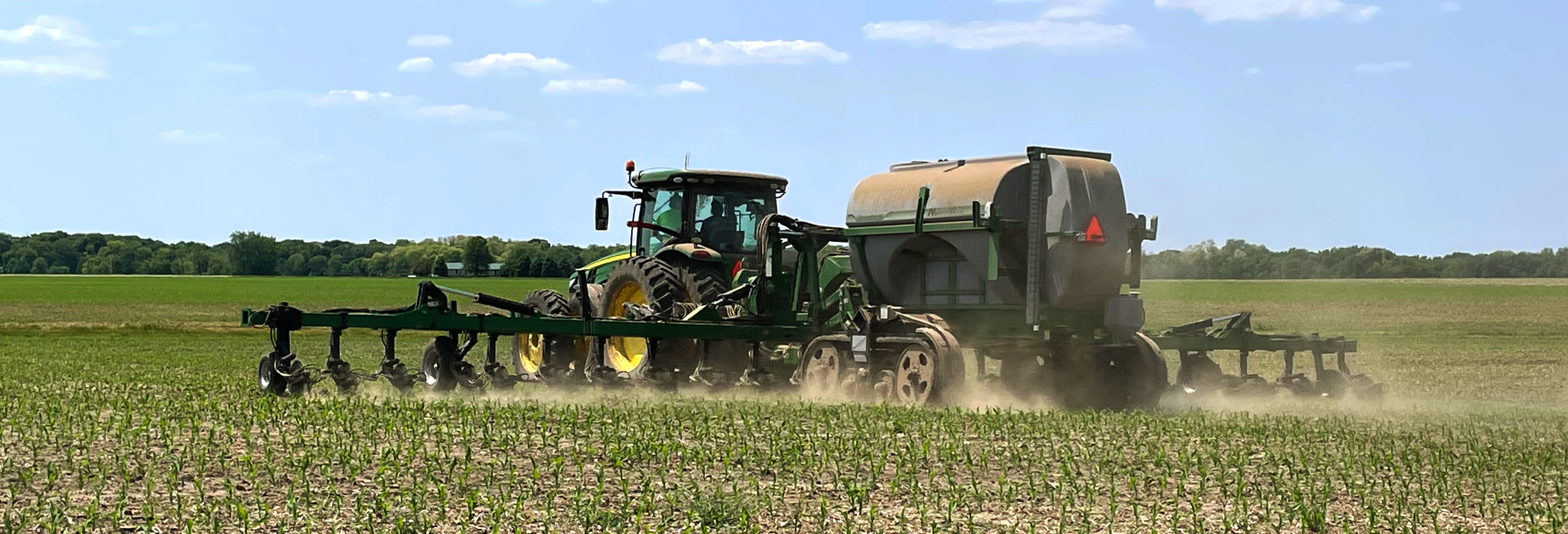
With fertilizer markets remaining volatile and fuel prices continuing to pressure farm budgets, now is a pivotal time to re-evaluate management strategies and find practical ways to reduce input costs without sacrificing productivity. For Soil and Water Outcomes Fund farmers, an evaluation of your nitrogen use efficiency and adjusting rates can be the solution to lowering input costs and increasing SWOF contract payouts at the same time.
Nitrogen is one of the largest annual input expenses for many operations. While every acre and every season are different, overapplication can lead to unnecessary costs while contributing to greenhouse gas emissions and potential nutrient runoff into waterways. We recommend farmers take a closer look at strategies that help ensure nitrogen is applied at the right rate, at the right time and in the right place.
Crunching the Numbers
In our analysis of data from all SWOF-enrolled acres over the past five years, we discovered that many farmers are applying more nitrogen fertilizer than is actually beneficial to their crops. Reducing nitrogen applications can not only reduce input costs, but also increase SWOF payouts.
First, farmers should assess their total cropping system to determine how manure applications and cover crops may be able to supplement nitrogen. Additionally, integrating crops that require less or no nitrogen fertilizer can make a significant impact on overall farm nitrogen efficiency.
Improved nitrogen management also creates environmental benefits that matter within SWOF’s outcomes-based model. When excess nitrogen is reduced, there is less potential for nitrous oxide emissions—a powerful greenhouse gas—and less risk of nutrient runoff leaving the field. These outcomes contribute to measurable environmental improvements, increasing SWOF payments for enrolled farmers.
Maximizing the Impact
Efficient nitrogen use becomes even more impactful when combined with other conservation practices like cover crops and reduced tillage. Together, these systems can:
Improve soil structure
Increase organic matter
Enhance water infiltration
Support long-term soil health
Healthier soils are often better equipped to retain nutrients and moisture, helping growers build resilience against both weather and market volatility.
Importantly, improving nitrogen efficiency is not limited to simply cutting rates across the board. The goal is to maximize efficiency and return on investment by applying nutrients where and when they are needed most. Small adjustments in management can make a meaningful difference both economically and environmentally.
As farmers continue facing pressure from input costs, sustainability expectations and changing weather patterns, conservation practices are increasingly becoming tools for operational efficiency, not just environmental stewardship. Programs like SWOF are designed to help farmers capture additional value from practices they may already be considering or implementing on their operation.
Every pound of nitrogen that stays where it is intended—supporting crop growth instead of being lost to the environment—represents both an agronomic and economic opportunity. Improving nitrogen efficiency can help farmers reduce risk, strengthen resilience and increase the return on their SWOF participation.
Reach out to your SWOF field representative with any questions about optimal nitrogen management on your farm.