
A Farmer-to-Farmer Approach to Conservation
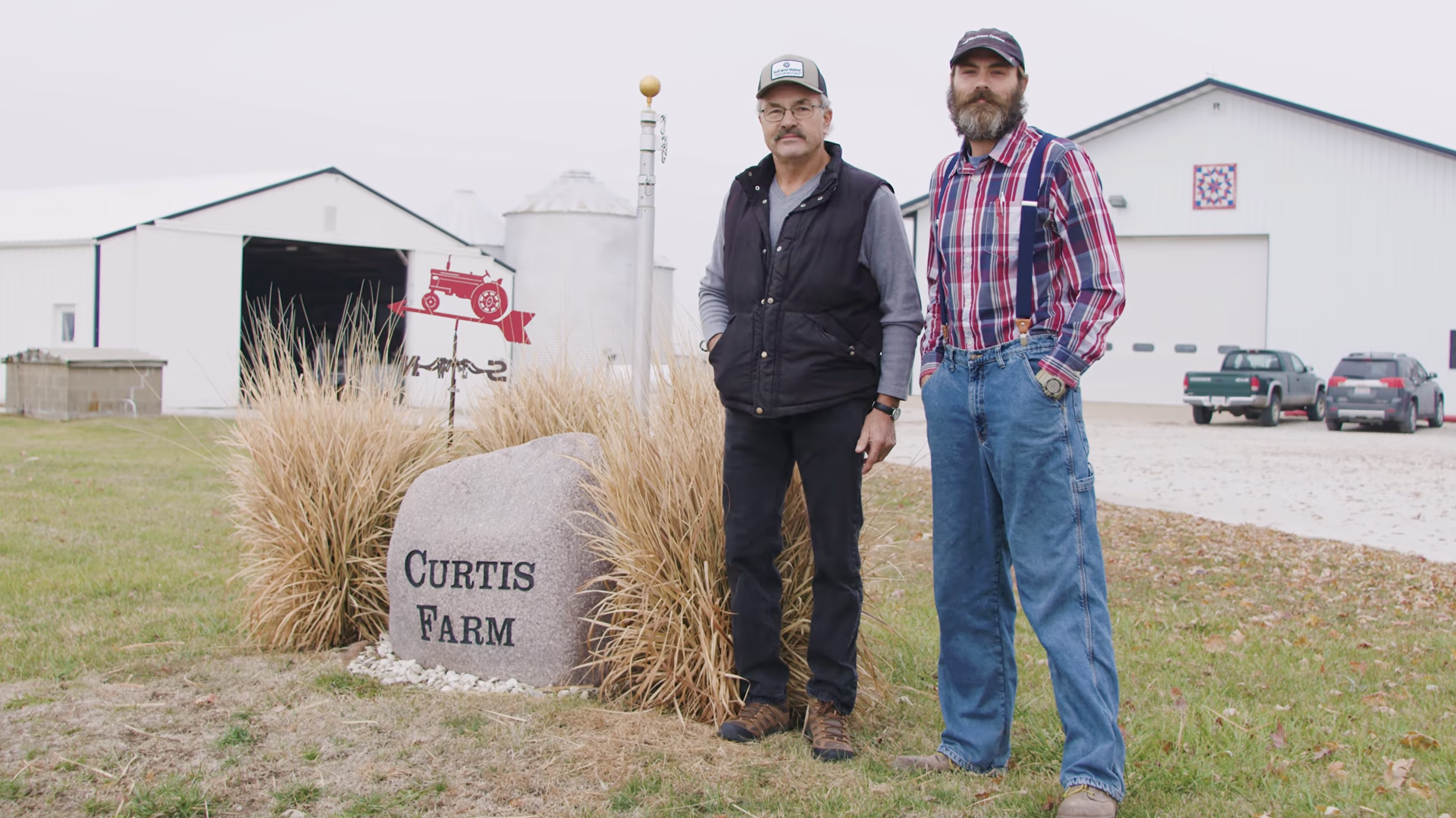
For many farmers, carrying on a legacy is a privilege they hold dear, and that includes both the farming business and the land that it occupies.
Mitchell Curtis is a fourth-generation farmer in west-central Illinois, where his family has farmed since his grandfather settled there in the 1920s. Today, Mitchell farms alongside his father, mother, wife and son, Ken, on more than 2,000 acres between the Illinois and Mississippi rivers.
The farm is primarily a corn and soybean operation, with the family typically maintaining a 50/50 split, while adjusting acres based on market conditions. Their soils are productive, and the Curtis family has continued to look for ways to protect and improve them.
“We started to get the green thumb to try to pursue doing what is right while acknowledging that we have to financially be able to keep the doors open and the lights on,” Mitchell explains.
That balance between stewardship and profitability has shaped the family’s approach to conservation, and, ultimately, is what led them to the Soil and Water Outcomes Fund.
Expanding What Works
The Curtis family has been exploring ways to improve soil health for many years. Before discovering SWOF, they experimented with reduced tillage and no-till and were beginning to incorporate cover crops into their management system, aiming to optimize crop nutrition and alleviate stress.
“We’re pretty aggressive in our nutrient management approach,” Mitchell says. “The foundation is to try to manage stress, knowing, just like us, any time we can manage our stress better, we’re going to have a more positive outcome.”
SWOF provided an opportunity to expand these efforts. A family friend introduced Mitchell and Ken to our organization, and the two connected with one of our field representatives to discuss their goals. From that first visit, the Curtises felt a distinct difference between SWOF and other conservation programs.
“Instead of somebody trying to sit there and tell you what to do, they were an organization that’s trying to walk alongside you,” Mitchell describes. “Learn more about what it is you’re trying to achieve to see if there is an opportunity where they could bring service and value to you.”
That farmer-first approach was important to the Curtis family. Conservation decisions ultimately have to make sense for the individual farm, and a practice that works well in one operation may not be the right fit for another.
Rather than prescribing a particular management system, SWOF works with farmers to identify opportunities that align with their goals and then provides financial support for implementing eligible conservation practices.
A Trusted Partnership
As with all aspects of farming, enrolling in a conservation program can feel like a risk to some growers. SWOF’s one-year contracts and 25% upfront payment helped Mitchell feel confident in the partnership.
That structure is intentionally designed to allow farmers to experiment with conservation practices without making a long-term commitment. They are able to test different management practices and see how they perform on their acres before agreeing to continue the practices into the future.
“We want a long-term relationship, but we want to keep it with a short-term commitment,” Mitchell says. “We want the value of our relationship to drive the long-term guarantee.”
Since working with SWOF, Mitchell says the experience has reinforced the importance of having a conservation partner that approaches the relationship with farmers from the same side of the table.
“Their integrity, their honest approach to working with us and what we’ve experienced so far—it felt like a farmer-to-farmer discussion,” Mitchell says. “[It] felt like they were sitting along with us at the table instead of across from us.”
The Curtises have seen the value of conservation for years. Now, they have a trusted partner supporting them. As Mitchell says, “For anybody who is truly looking to implement change on their farm, I could not offer a better prescription than what the Soil and Water Outcomes Fund provides.”