
Rethinking Tillage: When Is a Pass Worth It?
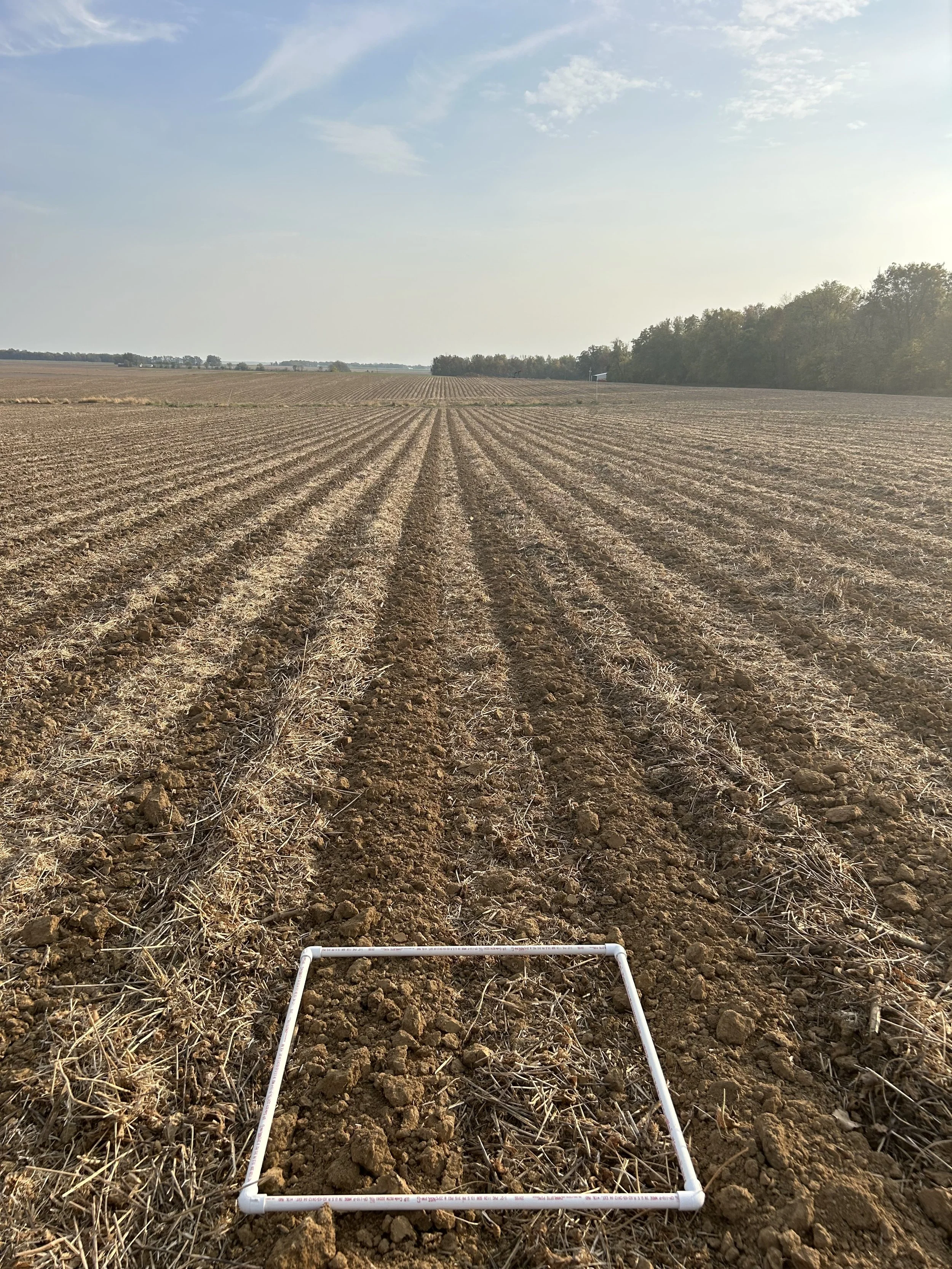
Tillage has a purpose on the farm. It can manage residue, prepare a seedbed, address compaction, incorporate products or help create conditions for successful planting. But every pass also comes with a cost—and not just the cost of fuel.
Labor, machinery ownership, depreciation, repairs, time and soil disturbance all factor into the equation. These considerations add up to a couple of complex questions:
What is this tillage pass accomplishing?
Is there a more efficient way to accomplish the same thing?
Establishing a Benchmark
Before changing your tillage system, you need to have an honest understanding of what you’re doing today and how it’s working for your fields.
For each field, document the tillage passes you’re making and the reason behind them, then put a cost against them. A pass that costs $20 or $25 per acre might not seem significant on its own, but when you multiply that across hundreds or thousands of acres, you might be faced with a startling reality.
Next comes the even more important question: what are you getting in return? If a pass consistently solves a problem that would otherwise affect planting, emergence or yield, it may be earning its place in your management system. But if you’re making a pass just because you’ve always made it, it’s time to question that.
The Reality of Reduced Tillage
One of the biggest misconceptions about reduced tillage is that it means moving directly from conventional tillage to no-till. In reality, there are many systems between the two ends of the spectrum.
SWOF-approved tillage practices include:
No-till
Roller crimping or packing
Strip-till
Vertical tillage
Harrowing, drag reduced
Subsoil/inline ripping
Rotary hoeing
Each practice serves a distinct purpose, and several have specific equipment and operating requirements under the Soil and Water Outcomes Fund’s standards. Our program was designed this way on purpose, providing flexibility for farmers and the varying needs of each field.
A well-drained field with manageable residue may respond differently to reduced tillage than a field with heavy residue, compaction concerns or challenging planting conditions. Our goal is to determine the minimum level of disturbance necessary for each field and cropping system.
Keys to Reduced Tillage Success
Reducing disturbance can benefit your fields in many ways, but there are also many considerations to keep in mind when adjusting management practices.
1. Residue Management
A successful reduced-tillage system starts with what happens at harvest. Uniform residue distribution can make planting into residue much more manageable. Poor distribution can create problems that show up the following spring.
2. Planter Setup
When planting into higher-residue conditions, the planter needs to be capable of maintaining consistent seed depth and seed-to-soil contact. Row cleaners, downforce and other planter adjustments can become particularly important as soil disturbance decreases.
3. Guidance
This is especially important with strip-till. The planter needs to consistently follow the strip. If the planting pass isn’t aligned with the tilled zone, the benefit of creating that seedbed can quickly disappear.
4. Soil Conditions
Reduced tillage doesn’t mean ignoring soil conditions. Planting into wet soil can create problems that no amount of reduced tillage will solve. The goal is to protect soil structure while creating conditions where the crop can establish successfully.
5. Equipment Configuration
How a tool is configured and operated can determine whether it meets a reduced-disturbance objective. For example, SWOF’s guidelines for vertical tillage call for a nearly straight gang angle, tillage depth of less than three inches and configurations that avoid aggressive concave or wavy discs and aggressive finishing tools. Similarly, a reduced harrow must be operated at a uniform depth of three inches or less without aggressively stirring or inverting the soil. Read the full SWOF tillage guidelines here.
Crunching the Numbers
The financial factor is the other part of the equation. Suppose eliminating one tillage pass saves $20 per acre in fuel and labor costs. If you’re farming 1,000 acres, that’s $20,000 saved, plus potential additional financial incentives from programs like SWOF.
The full list of cost factors is extensive:
Yield
Fuel
Labor
Machinery wear
Depreciation
Fertilizer or other inputs
Planting speed
Fieldwork timing
Soil conditions
For example, adopting practices that eliminate a tillage pass can save $9-15 per acre in reduced costs. When combined with an average SWOF payment of $25-35 per acre for conservation practices, the returns add up quickly. An ROI of $50 per acre on 160 acres is $8,000, which scales up as acres enrolled or added practices increase.
If a different system improves planting conditions, reduces another input or allows you to cover acres more efficiently, the economics can change again. That’s why farmers need to crunch the numbers for your own operation, rather than try to create a one-size-fits-all approach.
→ Read this article for more information on the economics of tillage.
Make Every Pass Earn Its Keep
By keeping these considerations in mind, farmers can take “reducing tillage” from a vague idea to a tangible goal with a clear plan of action. Benchmark your current system, put a cost against each pass, identify what each pass accomplishes and look for opportunities to maintain the agronomic outcome with less disturbance, less equipment, less fuel or less time. And when the changes are implemented, measure them. This process ensures every pass through your field is done with purpose.
