
Building Farm Resiliency through Cover Crops
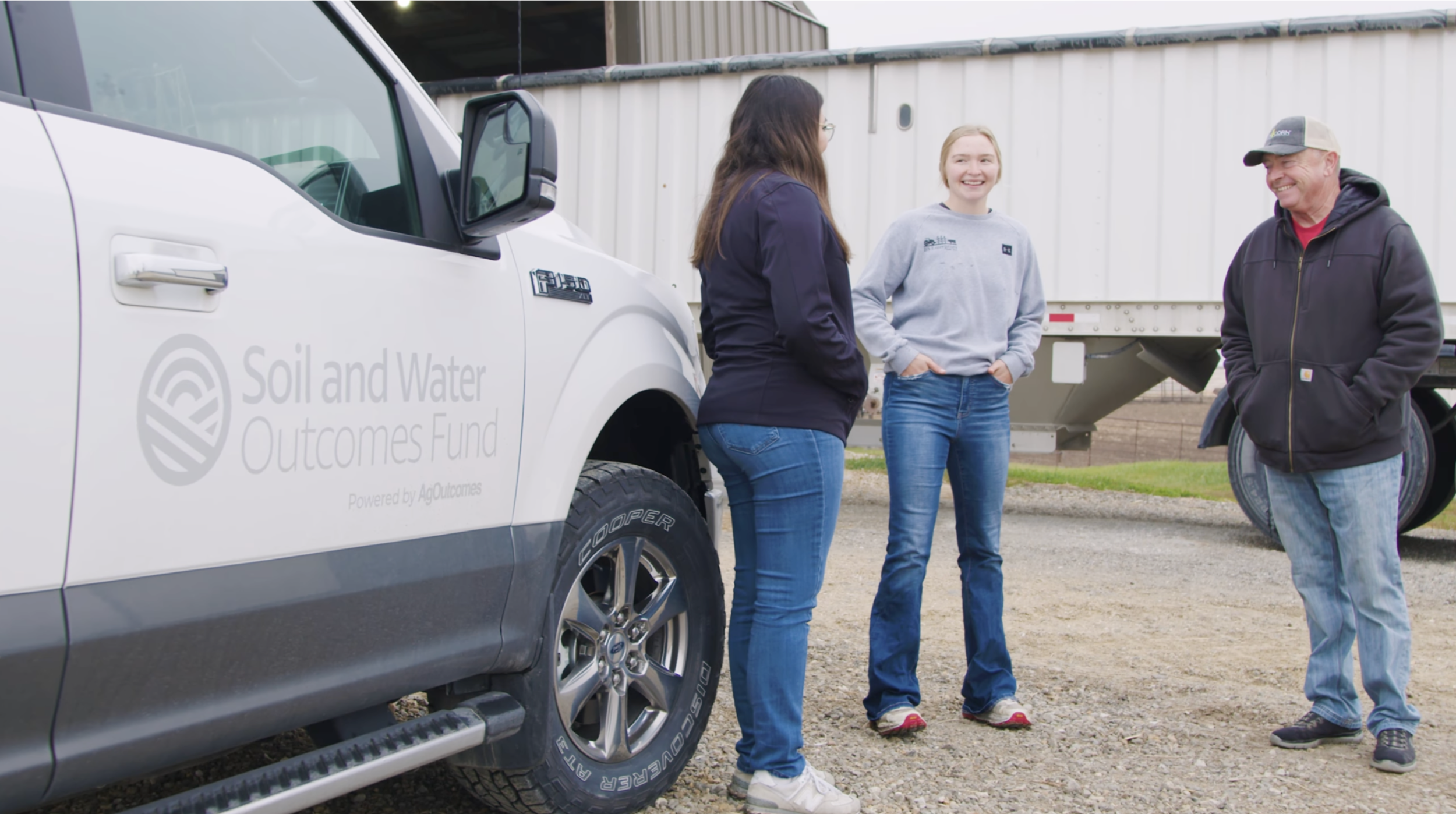
Rich soil, rural charm and family legacies—they’re what Keota, Iowa, is known for, and Sophie Sieren fits right in. Working alongside her father, Lance, and sister, Ellie, Sophie is a full-time farmer at Bell Family Farms. The operation primarily focuses on row crops, but it is diversified with a small cattle herd.
Located in Washington County, the farm benefits from some of Iowa’s most productive soils. Still, Sophie is determined to improve the land even further. Conservation is a priority for many local farmers, and cover crops are the norm.
“Washington County is kind of like the cover crop capital of the world, or so we think,” Sophie jokes.
Getting Started
Like many farmers considering conservation programs, Sophie and the rest of Bell Family Farms partners wanted to understand exactly what participation would involve before committing. Once they learned about the Soil and Water Outcomes Fund, the process was straightforward. The family met with a SWOF field representative to discuss their current management practices and any prior cover crop history, evaluate potential practice changes and work through the enrollment process together.
Bell Family Farms knew they could trust SWOF because they trust the organization behind it: the Iowa Soybean Association. Working with commodity groups is familiar to the family, and this prevented any doubt in what SWOF had to offer.
“In the carbon space, there’s a lot of unknowns,” Sophie says. “There are some programs that maybe you question a little bit, but we had no hesitation.”
The flexibility of SWOF’s conservation programs and our field representatives also stood out to Sophie.
“This program is built so if you want to just try 40 acres this year, you can,” she explains. “We really appreciate the one-year contract because, being farmers, we don’t know what the next year is going to look like.”
That flexibility creates an opportunity for producers to learn, evaluate results and build confidence before expanding conservation practices across additional acres.
Expanding Impact
Since enrolling with SWOF, Bell Family Farms has significantly expanded their use of cover crops, turning an interest in improving soil health into part of the routine across the entire farm. Today, rye cover crops are established across every acre of the operation.
Sophie sees the impact on the farm’s fields and finances. Cover crops help suppress weed pressure, improve field conditions and support earlier planting. At the same time, SWOF program payments help offset implementation costs, reducing the financial burden often associated with adopting new practices.
“We’ve been pretty pleased with the success we’ve had, and we hope to continue to learn and figure out what practices we need to be doing to really help our operation,” Sophie says.
As a young farmer, Sophie has become an advocate for conservation practices and programs that help producers adopt them successfully.
“It’s been a great program for us,” Sophie says. “I am an advocate, and I continue to advocate, especially for younger generations that are wanting to switch something up on their operations.”
Through their partnership with SWOF, Sophie and the rest of the Bell Family Farms team are demonstrating how practical conservation practices can support both operational success and long-term sustainability and resiliency of the land.
Hear Sophie’s full story:
